The three most common fault modes of the motor controller and their preventive measures

As the core component of an electric vehicle, the reliability of the motor controller directly determines the safety of the entire vehicle. When the vehicle experiences sudden shutdown or overheating alerts, quickly identifying the cause of the fault is of utmost importance. I will summarize the following three most common fault modes of the motor controller and provide systematic preventive measures.

The IGBT explosion caused by overcurrent in the motor controller

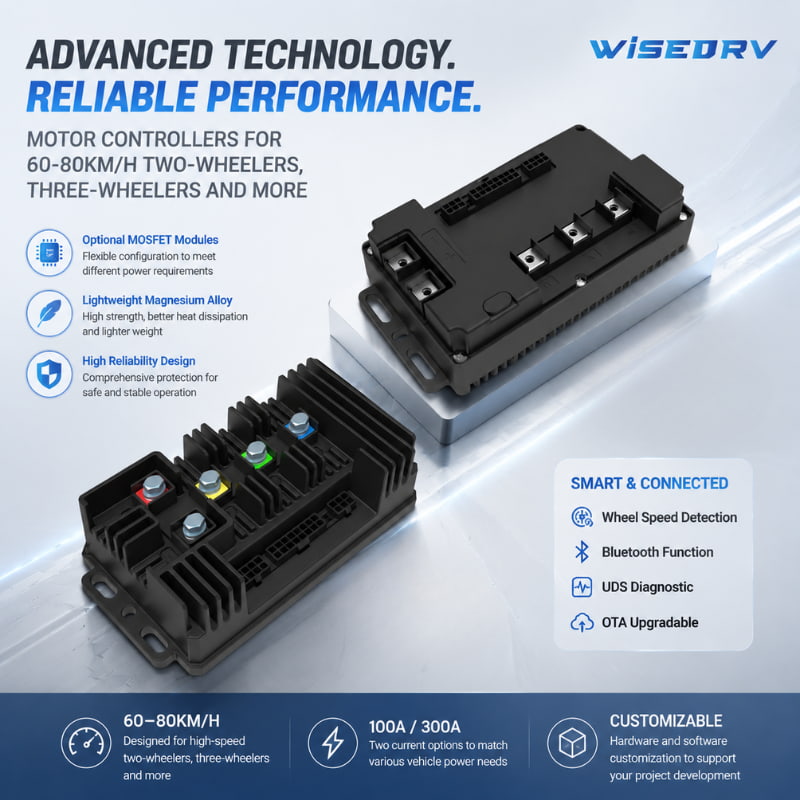
The IGBT is the core component of the motor controller. In case of overcurrent or short circuit faults, it is highly likely to cause permanent damage to the equipment.This fault risk is particularly common in mainstream models such as medium and high-power 3 phase motor controller and bldc motor controller.


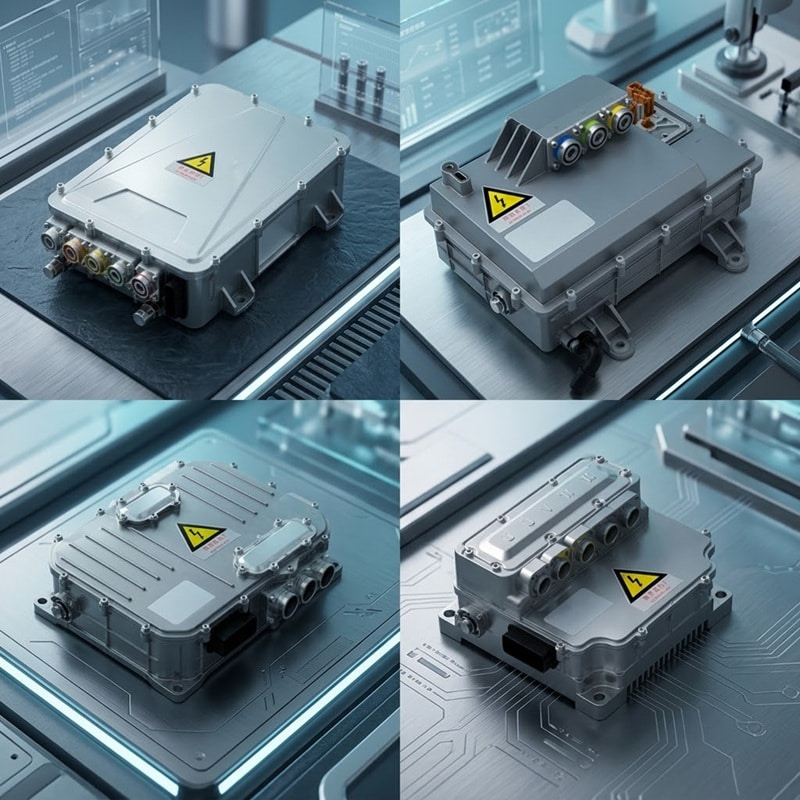
WISE's motor controller is equipped with hardware-level overcurrent, short circuit and peak voltage protection, and combines an optimized IGBT driving scheme. It can respond rapidly within microseconds and cut off the risk of failure, fundamentally preventing IGBT explosions and significantly improving the safety and service life of the equipment. 


Common Causes of Motor Controller Overheating Faults and Heat Dissipation Optimization Solutions

When high-voltage motor controllers and high-load electric motor controllers are operating in vehicles, problems such as overheating fault codes, power reduction or shutdown, and abnormal increase in shell temperature become particularly prominent. The main causes are usually due to prolonged overloading, failure of the cooling system (such as pump failure, radiator blockage), and insufficient coolant.


The WISE motor controller uses automotive-grade IGBTs and is equipped with an optimized heat dissipation design to ensure good contact between the IGBT and the heat sink; it also features multiple NTC temperature monitoring points, an internal high-precision temperature model, and a three-level intelligent power reduction protection.When the temperature reaches the limit value, the system will automatically and smoothly reduce the power to prevent sudden failures and shutdowns.

Causes of Communication Failure in Motor Controller and Anti-interference Measures

When the communication between the motor controller and the VCU is interrupted, reports communication failure codes, or fails to receive instructions, it is usually caused by abnormalities in the physical layer of the CAN bus, electromagnetic interference, or ground potential difference.


The WISE motor controller adopts industrial-grade isolated CAN interface, supporting various communication methods such as CAN 2.0, CAN FD, and single-line communication. It is equipped with hardware filtering, software fault-tolerant design, and communication timeout safety processing mechanism, which can ensure stable and reliable communication for your vehicle even in harsh conditions.

Choose  reliable motor controller

Any malfunction of the motor controller will lead to an increase in costs. Choosing a reliable and stable motor controller has become an inevitable choice.WISE has been dedicated to developing high-quality and stable motor controllers for over a decade. 


All products have undergone rigorous testing and are equipped with a variety of hardware protection measures and software fault diagnosis functions to ensure stable operation even under harsh conditions.


If you need a customized solution or technical equipment support, please feel free to contact us at any time.

What Are the Emerging Trends in Electric Motorcycle Hub Motor Controller Technology for 2026 and Beyond?

As 2026 approaches, the various demands for hub motor systems are also constantly changing, moving towards the goals of improving efficiency, enhancing thermal management, and achieving more intelligent integration.The technology for powering electric motorcycles has advanced rapidly due to these requirements.For manufacturers and original equipment manufacturers who wish to remain competitive, understanding these trends is crucial. Here are the key dynamics shaping the future development of electric motorcycle hub motor controller technology.


Create more intelligent and integrated motor controllers

We are moving towards intelligent wheel drive units, where the motor, inverter, and control electronics are integrated together for real-time communication, with the 48v brushless motor controller serving as the core component that bridges hardware and software for seamless coordination. This integration enables precise torque vector control and predictive maintenance. For riders, this means a safer and more responsive riding experience. For manufacturers, this simplifies the vehicle assembly process and reduces the complexity of wiring. This trend directly influences the way we design "electric motorcycles" systems, prompting us to develop high-power density units that can withstand pressure in extremely difficult and harsh road conditions.


Advanced Thermal Management Keeps Motors Running Cool

High temperatures have always been the biggest enemy of performance. In 2026, effective thermal management will become a competitive advantage. Facing the continuous power demand during high-speed driving and uphill sections, the cooling capacity of passive air-cooling systems has reached its limit. The industry is shifting towards liquid cooling solutions to meet the needs of high-performance motor controllers. By actively managing heat, these systems can maintain peak power for a longer period without overheating. This feature is particularly important for high-performance motorcycles operating under continuous heavy loads. Better heat dissipation can also extend component lifespan and enhance reliability. For DIY vehicle owners, choosing a complete "electric motorcycle motor kit" equipped with the appropriate thermal management system is crucial for maintaining stable performance.


Modular platforms simplify the development process

Modularization will become the dominant trend in 2026. Suppliers no longer design unique motor controllers for each vehicle, but instead create platforms with extremely wide adaptability, suitable for different power levels and vehicle types. This approach reduces the development costs of original equipment manufacturers and promotes the product launch time.


The future motor controllers will possess intelligent and efficient heat dissipation capabilities as well as optimized material properties. As the manufacturer of motor controllers, WISEDRV firmly believes that the perfect synergy between future hardware and software will achieve power supply, while also ensuring accuracy and security.

What Is an Electric Drive System?

The Technology Behind Motion Control

You may come across terms like "electric drive system," "motor drive system," or "electrical drive system"—they all mean the same thing.


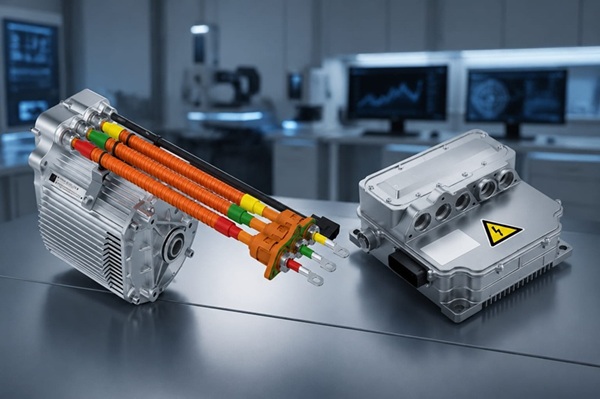
Simply put, an electric drive system converts electrical energy into controlled motion. It powers electric vehicles, conveyor belts, drones, and more. The electric drive system components are straightforward: the motor creates rotation, the controller determines speed and torque, and the inverter adjusts power to the motor.


Why does it matter? These systems run elevators, trains, robots, and EVs. They convert over 90% of electrical energy into work—far more efficient than gasoline engines at 30%. They're also precise, responsive, compact, and produce zero emissions.


Not all drives are the same. Some use DC (golf carts, basic tools), others use AC (EVs, industrial equipment). Some run at constant speed (fans, pumps), others vary speed (vehicles, precision machinery). But regardless of type—industrial, traction, or servo drives—the job is always the same: turning electricity into precise motion.


So next time someone asks about electric drive systems, you'll know exactly what they're referring to.

What to Check Before You Import a Variable Speed Motor with Controller


Certification and Compliance for Your Target Market

When many car manufacturers and system integrators purchase power components overseas, they often only focus on the various specifications and parameters of the motors, but fail to realize the complexity of the motor controllers themselves. To avoid many troubles when placing orders in the cross-border field in the future, it is necessary to conduct the following checks first.


The first step is to verify consistency, which is usually the most crucial part. A controller that has been certified in one market does not necessarily mean it meets the requirements in other markets. For instance, a controller with a CE mark, if used in the North American market, typically requires additional tests related to UL or FCC. Besides safety certification, the electromagnetic compatibility report also needs to be verified. In actual use, an improperly filtered controller may interfere with the vehicle's remote information system, sensors, or radio equipment, making it difficult to determine the specific source of the fault on-site.

When evaluating a 3 phase motor controller, always request the exact test reports that match your target market, not just a generic declaration of conformity.


Real-World Performance Beyond the Datasheet

The second inspection should focus on the actual usability compatibility.

One should not rely solely on the product manual. Instead, based on the actual situation, one should assess the true performance of the controller. The most important thing is to observe its operation under continuous load, extreme temperatures, and sudden conditions. Some integrators rush to select variable-speed solutions based solely on peak power.This is why it is crucial to understand the architecture of a variable speed motor with controller. You need to actively learn about its thermal management system, cooling requirements, and how the controller handles regenerative braking under high power conditions.

The third aspect that requires special consideration is the total cost. Many purchasers are initially attracted by the low prices of the goods, but what follows is a series of hidden costs. The money saved in the early stage will be completely offset.

These costs include logistics cycles, tariffs, and storage expenses. The most crucial factor is whether the technical support can be provided promptly. Once the on-site equipment breaks down, not only will there be time zone issues, but communication will also be a major obstacle, which can make many problems difficult to solve quickly.

 Every day of downtime will cause losses to the client's operations. A reliable electric motor controller should be accompanied by complete and clear documentation, timely technical support, and a comprehensive warranty process covering cross-border logistics.


Supply Chain Transparency and Lead Time Predictability

Finally, do not overlook supply chain transparency. Ask your supplier about component sourcing, especially for critical parts like power modules, capacitors, and microcontrollers. Once the supply chain is disrupted, the delivery cycle could be directly extended from six weeks to six months. Having a secure inventory in hand or choosing suppliers with more diverse purchasing channels will ensure a more stable supply. This is particularly important during the stage of capacity expansion.


Importing a variable speed motor with controller is not just about matching voltage and current ratings. This is done to ensure that the components can operate stably in your actual application, meet the requirements of the target market regulations, and also receive reliable technical support that is in line with the project schedule. Taking the time to verify certifications, real-world thermal performance, total cost structure, and supply chain stability before signing the purchase order will help you avoid delays, unexpected costs, and field failures after deployment.


Why Choose WISEDRV Motor Controllers?

Xiamen Wise Electrical Technology (WISEDRV) is dedicated to advancing electric drive system technology for new energy vehicles.We specialize in permanent magnet synchronous motors, integrated multi-in-one motor controllers, generator controllers, and vehicle control units. But we don’t just deliver parts—we provide full solution designs. Whether it’s electric cars, commercial vehicles, or specialty machines, we have a well-suited option.


Our Products

What stands out is just how widely our technology is applied. Our products have a wide range of applications, covering everything from all-electric and range-extended passenger cars to commercial vehicles, construction machinery vehicles, and electric vehicles, among others.  As a professional provider of electric drive systems for vehicles, we support reliable and stable operation for various models.


R&D Strength: Patents & University Collaboration

Core Technology, Independently Developed

We have maintained a consistent and meticulous approach in our R&D efforts over the past several decades, holding 44 patents. The majority of these patents have been granted, while a few are still under application. These patents cover various aspects including motor control algorithms, hardware, and design.Our expertise in electrical drive systems ensures stable performance and high efficiency in complex working conditions.This continuous innovation helps us maintain an edge in our core areas.


University-Affiliated Graduate Workstation

Our collaboration with Huaqiao University since 2019 is noteworthy too. Running a graduate research workstation there showsour commitment to blending practical industry know-how with academic research, nurturing talent and driving joint projects. 


Choose WISEDRV

In a nutshell, partnering with WISEDRV means tapping into technology that’s been proven in real-world, large-scale applications.

Why Does the AC Electric Motor Controller Matter Most for EV Performance?

When engineers and vehicle manufacturers evaluate electric vehicle powertrains, much of the attention naturally goes to the motor and battery. However, in real-world development programs, the component that ultimately determines whether a vehicle feels responsive, efficient, and reliable is often the least visible: the ac electric motor controller.

Real-World Demands and the Need for Precision

Consider a typical use case: an electric utility vehicle operating in an urban environment. These types of vehicles often encounter situations such as traffic congestion, frequent lane changes and sudden acceleration, as well as long periods of low-speed driving in narrow areas. If the control is not precise enough, the driver will clearly feel the abrupt acceleration, poor energy recovery during deceleration, and unstable torque output. Under these complex conditions, the motor itself is usually not the weak point; what really matters is the controller, which can convert the driver's operation into smooth and timely power output.

Speed Control Affects Daily Operations

In practice, the controller acts as the central interpreter between the battery, the driver’s inputs, and the motor. It continuously adjusts voltage, frequency, and phase current to match real-time demands. This is where ac electric motor speed control becomes essential. A well-designed controller enables seamless transitions from zero-speed torque to high-speed cruising, maintaining stability even under variable loads. For example, in a light commercial EV carrying payloads up steep grades, the controller must regulate speed without overheating or introducing vibration.Field experience has shown that vehicles equipped with high-performance controllers outperform those with basic performance in terms of acceleration performance, regenerative braking efficiency, and system pressure.

 Flexibility Across Vehicle Platforms

Another critical real-world factor is flexibility. Manufacturers often develop vehicle platforms that must accommodate different power levels, voltage architectures, and auxiliary systems. A single vehicle model might need to support both low-power urban delivery versions and high-performance variants. In such scenarios, the use of an AC electric motor with speed control that features system-level speed regulation enables the same basic hardware to be adapted for various configurations, eliminating the need to redesign the entire power system. This approach reduces development risks and shortens the product launch cycle, making it a crucial priority choice for vehicle manufacturers with tight launch schedules.


High Performance Motor Controller

Ultimately, the motor determines the performance limit of the vehicle, while the controller is the key factor that determines whether this performance can be safely, efficiently, and user-friendlyly implemented in practice. For engineers responsible for the electric drive system, the selection of the controller is no longer just a technical choice; it directly determines whether the overall vehicle performance is stable and reliable, whether it is suitable for actual road conditions and usage scenarios, and is a core component that affects the vehicle's performance.

Why Will the PMSM Permanent Magnet Synchronous Motor Dominate Future EVs?

If you are involved in work related to electric vehicles, then you may have noticed that in the automotive industry, there is a type of motor that is becoming increasingly common: the pmsm permanent magnet synchronous motor. From mini cars to tricycles and construction machinery vehicles, this type of motor is quietly taking the lead in the automotive industry. But why is this so?

Achieve true energy-saving benefits

As the operator of an automotive company, the only issue that matters most is the cost per mile of vehicle operation. And the efficiency of a pmsm motor for ev  is much higher than that of other types of motors, especially in low-speed, parking, and starting driving scenarios.

Because less heat is generated and less energy is lost, this means that the same battery pack can travel a greater distance. For construction machinery vehicles that need to make hundreds of stops each day, this energy-saving efficiency directly reduces electricity costs and saves costs for vehicle operation.


Stable temperature control under high-temperature conditions

Imagine a fully-loaded vehicle climbing a slope. In this situation, the induction motor will definitely consume a large amount of current and generate a lot of heat, forcing the controller to limit the output power. However, permanent magnet synchronous motors are different. They can generate high torque with a relatively small current. As a result, the system does not heat up easily and the vehicle operates more stably. Even in high-demand application scenarios such as those involving construction machinery vehicles, it can ensure that the vehicles can work stably.


Optimization of the performance of the motor controller

The motor controller can also benefit from this design. Due to the continuous supply of the magnetic field by the permanent magnets in the permanent magnet synchronous motor, the controller does not need to consume additional electrical energy to establish the magnetic field. As a result, energy consumption is reduced, the control algorithm becomes simpler, and the system response is more timely and rapid. For automotive manufacturers or engineers developing construction machinery, the product characteristics of the permanent magnet synchronous motor can bring a smoother acceleration experience and more efficient regenerative braking effect to the vehicles. At the same time, it can also reduce the risk of system failure.


Market trend: The dominant position of PMSM continues to be consolidated

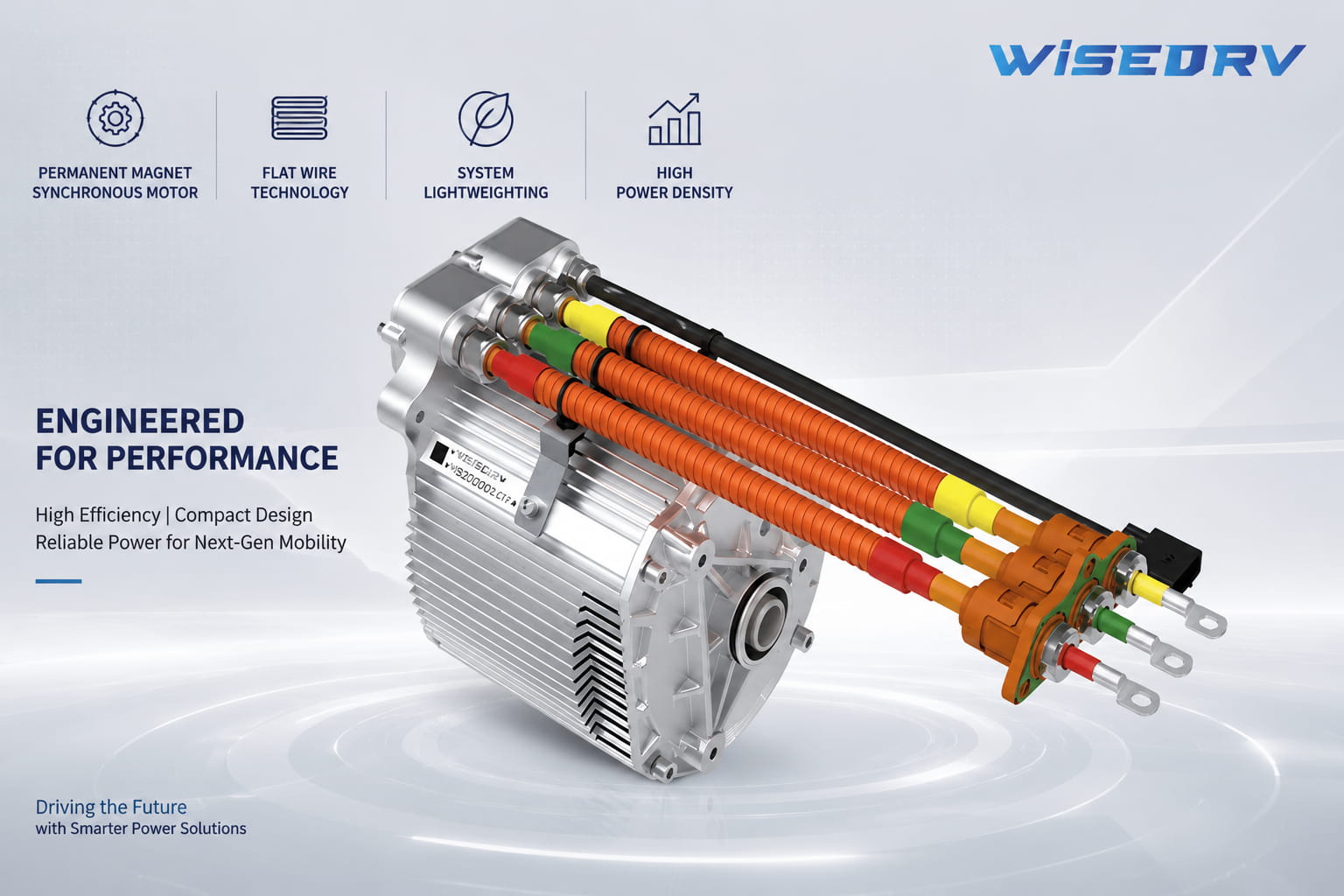
Leading permanent magnet synchronous motor manufacturers are expanding their production capacity to meet the large demand from automakers. Our 96V micro vehicle pure electric platform (flat wire PMSM + controller) fully leverages the advantages of PMSM, making the control algorithm simpler and response faster during vehicle operation, achieving high power density and lightweighting. It is an ideal driving solution for micro vehicles, tricycles, and construction machinery. With outstanding reliability and efficiency, PMSM will continue to dominate commercial electric vehicle power systems in the next decade.


From compact cars to construction machinery vehicles, the future of the automotive industry will be inseparable from permanent magnet synchronous motors. And if equipped with the appropriate motor controller, its potential will be even more remarkable. If you have a great interest in it, please feel free to contact us at any time.

POWERING HEAVY-DUTY PERFORMANCE PREMIUM TRUCK DIFFERENTIALS & TRANSMISSION GEARS BY FUJIAN TONGXING

Introduction
In the demanding world of heavy-duty trucks and construction machinery, every component must deliver uncompromising durability and precision engineering. At Fujian Tongxing Automobile Synchronizers Co., Ltd., we specialize in manufacturing high-performance truck differentials and transmission gears designed to withstand extreme loads, reduce downtime, and optimize your fleet’s efficiency. Whether you’re servicing ZF transmissions, rebuilding axles, or sourcing reliable OEM replacements, our solutions are engineered to exceed expectations.


Why Choose Fujian Tongxing?
1️⃣ Precision-Crafted Differentials for Heavy Loads
Our truck differentials are built for mining, logistics, and construction industries, offering:

  • High torque capacity (up to 3,500 Nm) with heat-treated alloy steel.

  • Low-noise operation through advanced helical gear designs.

  • Seamless compatibility with Eaton, Meritor, and ZF axle systems.

2️⃣ Transmission Gears Built to Last
From 1st to 6th speed gears, our products ensure smooth power transfer and extended service life:

  • 30T-60T gears for ZF, Allison, and Volvo transmissions.

  • Laser-hardened surfaces (HRC 60+) to resist wear under abrasive conditions.

  • 100% ISO-certified testing for dimensional accuracy and fatigue resistance.

3️⃣ OEM-Quality Replacements, Competitive Pricing
We supply direct-fit replacements for popular models like ZF 1315304017 and Eaton 23589A, offering:

  • 30% faster delivery compared to traditional suppliers.

  • Custom modifications for specialized industrial applications.


Applications

  • Mining Trucks: Reinforced differentials for rocky terrains.

  • Fleet Maintenance: Affordable transmission gears to reduce repair costs.

  • Construction Equipment: High-torque gears for loaders and cranes.


About Fujian Tongxing Automobile Synchronizers Co., Ltd.
With over 15 years of expertise in automotive drivetrain components, we combine German CNC machining technology with rigorous quality control to serve clients across Europe, Southeast Asia, and North America. Our factory in Fujian, China, is ISO 9001-certified and trusted by leading heavy equipment distributors.


Call to Action
Upgrade your truck’s performance today! Explore our catalog of OEM-ready differentials and transmission gears on our Google-certified website:

📧 Contact: Kenny@tongxing-auto.com | 📞 +86-18250625736