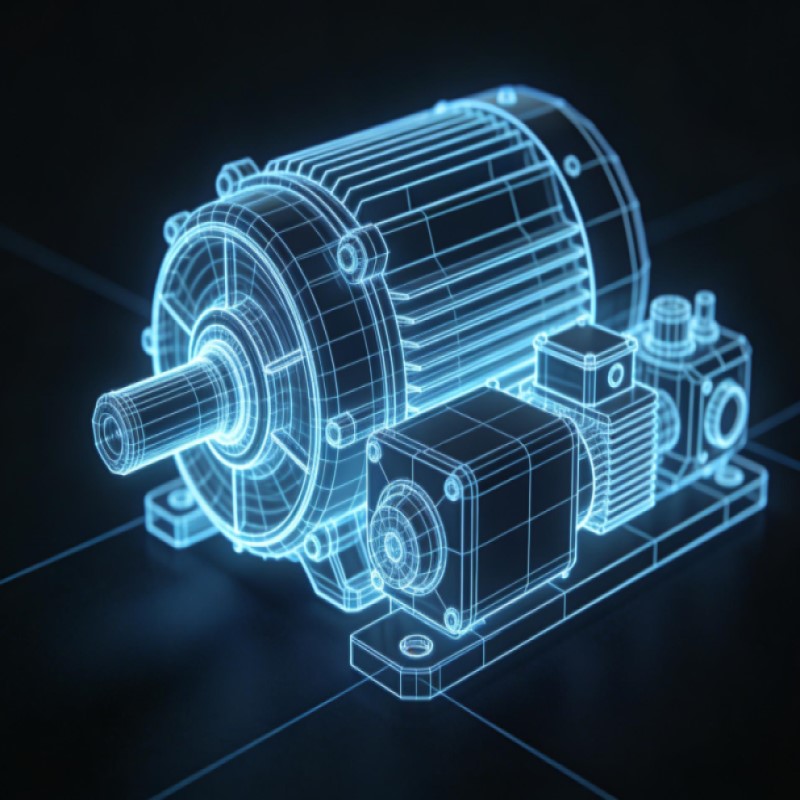
You may come across terms like "electric drive system," "motor drive system," or "electrical drive system"—they all mean the same thing.
Simply put, an electric drive system converts electrical energy into controlled motion. It powers electric vehicles, conveyor belts, drones, and more. The electric drive system components are straightforward: the motor creates rotation, the controller determines speed and torque, and the inverter adjusts power to the motor.
Why does it matter? These systems run elevators, trains, robots, and EVs. They convert over 90% of electrical energy into work—far more efficient than gasoline engines at 30%. They're also precise, responsive, compact, and produce zero emissions.
Not all drives are the same. Some use DC (golf carts, basic tools), others use AC (EVs, industrial equipment). Some run at constant speed (fans, pumps), others vary speed (vehicles, precision machinery). But regardless of type—industrial, traction, or servo drives—the job is always the same: turning electricity into precise motion.
So next time someone asks about electric drive systems, you'll know exactly what they're referring to.