Precision-Built Idlers for Extreme Conditions

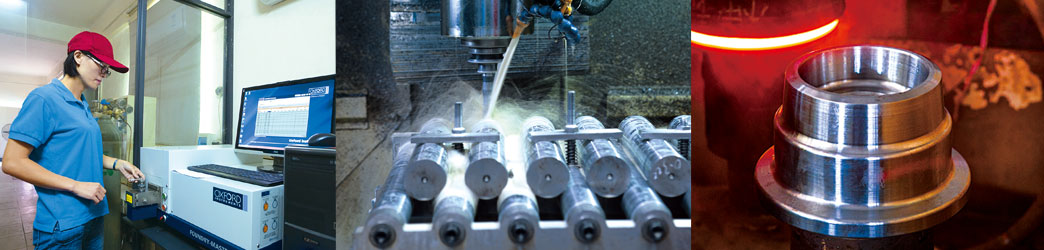
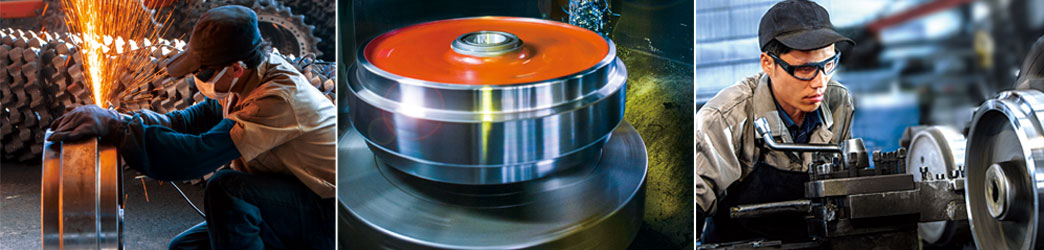
At XIAMEN YINTAI MACHINERY, we engineer excavator and bulldozer idlers to outperform in the harshest environments. While others compromise, we implement Japanese-grade manufacturing discipline that global OEMs trust.


ITR idler for bulldozer


Material Superiority


Raw Steel Selection:

* Standard models: Premium 35MnBh alloy

* Heavy-duty models: OEM-grade 33Mn4 (identical to top-tier brands)


Critical Components:

* High-performance copper bushings

* Industrial-grade sealing systems


Unmatched Process Integrity


1. Complete Thermal Cycling

* Unlike typical manufacturers who skip steps:

* Weld repair → Full re-quenching → Precision grinding → Final heat treatment

* Mandatory tempering within 2-hour critical window


2. Depth Advantage

* 7-8mm hardening depth (2-3× deeper than industry standard 3mm)

*  "Hard shell-tough core" gradient structure


3. Japanese Precision


* Mazark CNC machining (imported)

* 100% non-destructive testing


Why It Matters


Competitors' shortcuts lead to:


* Premature wear in mining conditions

* Stress fractures from inadequate tempering

* Seal failures from inferior materials


Our idlers deliver 40%+ longer service life because we refuse to cut corners—where others see cost, we see durability.


Are seat belts required on all bus seats

Seat belts are a standard safety feature on most passenger vehicles, but are not a required safety feature on all passenger vehicles. For bus regulations in different regions, seat belts need to be configured according to the type of bus and geographic area of operation.


bus seat

1、Federal Regulations

Because smaller buses are more likely to be at risk of accidents in the event of an emergency or collision, U.S. federal law requires small buses weighing less than 10,000 pounds to be equipped with lap and shoulder belts.

2、State regulations

Each state in the United States for large buses such as school buses, commercial buses, have the decision to mandatory use of seat belts, so each state's seat belt requirements will vary.

3、California's specific regulations

• California requires that both large buses and small buses must be equipped with seat belts to protect the safety of students;

• Commercial buses, including tour buses, charter buses, and other large vehicles used for transportation are required to be equipped with seat belts;

• Passengers between the ages of 8 and 16 years old are required to wear seat belts

• For violations of failing to equip seat belts, fines are assessed accordingly.

4、Space Division

Some school buses consider a tightly spaced interior seat with padding to absorb impacts to be a safe environment. It can provide passive protection for passengers.

5、Enforcement

Enforcement varies from state to state, and in general California's enforcement is usually stronger, while other states' regulations are less stringent and seat belt availability is more challenging.

6、Other States

Regulations vary from state to state, with some states choosing to rely on seat segregation, and some having no specific seat belt requirements at all.


Not all bus seats require seat belts. However, if the vehicle seat by the seat belt, Xiamen Van Seat suggests that you need to wear a seat belt to protect your driving safety while the vehicle is in motion.

Can wheelchair seats be swapped with regular seats in a van

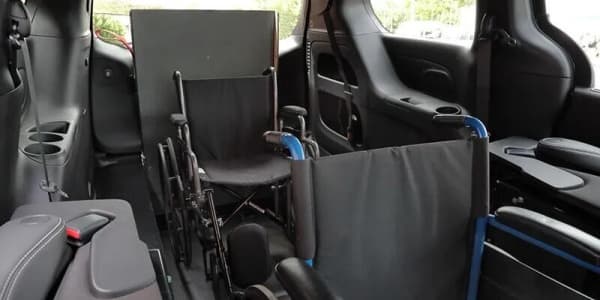
For wheelchair accessible modified van vehicles, both wheelchair access and standard seating need to be accommodated. For the seats in the vehicle, people often wonder if wheelchair seats can simply be interchanged with regular seats. There are a number of factors to consider, but we do not recommend a simple seat swap.


Wheelchair Accessible Vans seat

• Safety Standards

Standard van seats and wheelchair seating configurations meet stringent safety standards and crashworthiness requirements and have been safety tested to withstand the impact of an accident and provide adequate protection for occupants, and simple replacement of the seats may increase the risk of injury in the event of a collision.

• Airbag Deployment

Airbags are deployed according to the position and direction of the seats in the van. Simply replacing the seats may cause the airbags to change or even fail to deploy properly, resulting in a serious accident.

• Laws and regulations

Randomly modifying the seat may jeopardize the proper use of the seat and the safety system, and may not comply with industry standards and laws and regulations, exposing you to the risk of fines or other legal consequences.


From a safety and legal point of view, although it's easy to simply replace a wheelchair seat in a van with a regular seat, we don't recommend doing so because changing the design of these seats could jeopardize passenger safety and legal compliance. If you want to make the change, you can do so safely and compliantly by using a folding seat base, transferring the seat, or consulting a professional van conversion specialist.

Meet the King Long PEV Where Electric Innovation Meets Driver Comfort

The all-new King Long PEV Series is not just electric, it's also driver-centric. 

Engineered to simplify operations and enhance on-road safety, every detail is designed to support a more intuitive and confident driving experience.

Key Upgrades:
✅ Intuitive Dashboard Layout 
✅ Integrated Safety Assist Features 
✅ Driver Cabin with Comfortable Climate

The future of electric driving starts with PEV. 

KingLong PEV Electric Bus

King Long E12 Hybrid Bus Combining Safety, Comfort, and Sustainability

Today, let us get to know the King Long E12. Its hybrid drivetrain is more economical and environmentally friendly.

✅ The low-floor E12 boasts a 12.3-inch full LCD display, overhead air vents, and three double doors for a pleasant journey for both drivers and passengers.

✅It features durable and comfortable EU-standard hanging rings for tight security.

✅ With an optimized lightweight design and a higher-strength body, it is much safer.


How to tighten tracks on excavator

To tighten the tracks chain track link on a cat excavator, you can follow these general steps:

Park the excavator on a level surface and engage the parking brake to ensure it is stable.

Locate the track tensioning device on the excavator. It is typically located on the front or rear side of the track frame and consists of an idler wheel or a cylinder with a tensioning spring.

Use a wrench or socket to loosen the lock nut on the tensioning device. This nut secures the adjusting bolt in place.

Turn the adjusting bolt clockwise to tighten the track tension. This will increase the tension on the track chain.

Check the tension of the track by pushing on it at the middle point between the drive sprocket and the front idler. It should have a slight amount of give, but not be too loose or too tight. The appropriate tension can vary depending on the specific model of the excavator, so consult the doolincm manufacturer's guidelines or an experienced operator for the recommended tension.

Once you have adjusted the tension, hold the adjusting bolt in place and tighten the lock nut to secure the adjustment.

Repeat the process for the opposite side of the excavator.

After adjusting the track tension on both sides, test the machine by operating it in forward and reverse and observing the tracks. They should move smoothly, without excessive slack or binding.

It's important to note that these steps are a general guideline, and the specific procedure may vary depending on the model and type of Caterpillar excavator you're working with. Always refer to the operator's manual for the correct instructions and consult with a trained technician or the manufacturer if you're unsure about any aspect of the track adjustment process.

excavator track chains for sale

excavator idler wheel factory


King Long's Commitment to Green, Safe, and Comfortable Travel

King Long is driving the future with a commitment to sustainability and safety because a better journey should care for both people and the planet. 

Our vehicles contribute to reduced carbon emissions without compromising performance. Together with advanced safety systems and a more human-centered interior design, King Long vehicles are built to support greener, more comfortable and more efficient mobility.


King Long vehicles

How many companies make fire engines?(Ⅰ)

How many companies make fire engines?Ⅰ)


1、1st Attack Engineering, Inc.

Jeffrey Cook and his wife Jody founded 1st Attack Engineering, Inc. in 1999.

Jeffrey Cook is a seasoned firefighter who grew up helping out in his father's auto body and paint store, has fifteen years of volunteer firefighter experience, and is a member of the truck racing team.

Jeffrey Cook built his first fire truck conversion for a fire department in Auburn, Indiana in 1995.

1st Attack Engineering, Inc. is a one-stop shop for all emergency, rescue, and firefighting needs, dedicated to designing and building firefighting and emergency vehicles to meet the needs of our customers and to reflect the unique capabilities of the vehicle.

1st Attack Engineering, Inc.

2、4 Guys Stainless Tank and Equipment 

In 1974, the founder of 4 Guys started a company that repaired stainless steel milk tank trucks, and the company transitioned to fire truck manufacturing. Today the company produces a steady stream of 50 to 60 fire trucks per year and has annual sales of more than $23 million.

Provides all-welded stainless steel bodies with a 30-year warranty (body, subframe, pumphouse, compartment doors, and all stainless steel parts manufactured by the company).

4 Guys' engineering department makes multiple revisions to the truck's manufacturing drawings from time to time, not only to ensure that the product is safe and reliable, but also to comply with NFPA standards.

4 Guys Stainless Tank and Equipment

3、Alexis Fire Equipment IL

Alexis Fire Equipment was founded in 1947 and began as a small manufacturing facility that could only accommodate four fire trucks at a time.

Has an ever-expanding product line of unique customized aerial work platforms, rescue trucks and fire pumps, as well as major refurbishment and equipment re-installation projects.

Exclusive specialty vehicle lines including the Response 1, Vision Series and the new Engine 1 Series that truly understand the needs of firefighters and rescuers.

Customers can view online and get weekly updates on the progress of building a fire truck just for you, which can be promptly adjusted to your requirements.

Alexis Fire Equipment

4、Blanchat Manufacturing

Founder Greg Blanchat, Greg Blanchat is a member of the local fire department, understand the dangers of firefighting, committed to providing firefighters with safer equipment.

1989 saw the introduction of the BATROPS lateral rollover protection system, which provides six-sided steel protection that meets SAE J1194 standards.

Blanchat Manufacturing's brush work trucks meet NFPA field operations specifications to help improve FF safety;

Supports customization, allowing the trucks to be customized in a number of ways to meet MVFD's unique needs;

Blanchat Manufacturing

5、Bluegrass Fire Apparatus 

Bluegrass Fire Apparatus is a division of Bluegrass Tank & Equipment that specializes in fire truck manufacturing;

Bluegrass Tank & Equipment was founded in 1970 and began operations in January 1972 by Richard E. Davis before moving to Canyon City, Texas in 2016 to change its name to Texas Tank and Equipment;

Bluegrass Fire Apparatus manufactures commercial chassis tankers and pumper trucks, primarily serving rural fire departments.

Bluegrass Fire Apparatus has extensive experience in trailer manufacturing, repair, and can provide high-quality customized solutions for fire trucks.

Bluegrass Fire Apparatus

6、BME Fire Trucks 

Established in 1990, is a leading manufacturer of wildland firefighting equipment, capable of providing superior brush fire trucks, troop carriers, water trucks and BME equipment;

Provides firefighting equipment, protection and service to fire departments throughout the United States and Canada;

Serving fire departments that serve the California Department of Fire Protection (CAL FIRE), Bureau of Land Management (BLM), U.S. Forest Service (USFS), and municipal fire departments across the country.

We insist that every piece of fire equipment undergoes a rigorous inspection (safety, durability, performance) before it leaves the factory to ensure optimal performance in however severe the fire season may be.

BME Fire Trucks

7、Custom Fab & Body LLC 

Established in 1994, this is a modern manufacturing facility where employees have access to high-tech manufacturing equipment for design flexibility and CAD and other 3D modeling workstations;

Products are diverse, serving the fire and rescue emergency vehicle, service body, utility body, and utility service industries, as well as taking on military parts, rock crusher parts, and other custom assemblies or components;

For customized products for customer needs, there is no uniform standard, are designed and manufactured to meet the specific needs of customers.

Custom Fab & Body LLC

8、Custom Fire Apparatus, Inc 

Founded in 1978, is an original equipment manufacturer specializing in the custom design and manufacture of structural fire apparatus and rescue teams;

Uses Pro-E engineering software to perfect each piece of equipment and lasers to cut each part to ensure a tight and quality product;

is a fusion of personalized tradition and modern technology in the fire equipment industry, with custom designs beyond the capabilities of ordinary assembly line trucks.

Custom Fire Apparatus, Inc

9、Danko Emergency Equipment 

Founded in 1974, a family-owned business serving fire departments, rural fire districts and government agencies.

Manufactures and sells high-quality firefighting and emergency response vehicles, which include tankers, pumper/tankers, pumper trucks, rapid assault vehicles, rescue trucks, skid steers, wildland trucks, airport trucks, and other specialty vehicles.

The company's employees are familiar with the mechanics of the equipment and understand the changes and needs of the fire department in real time, making it one of the outstanding emergency equipment companies in the Midwest.

Danko Emergency Equipment

10、Deep South Fire Trucks, Inc. 

Mainly produces firefighting equipment such as fire pumper trucks, tanker trucks, rescue trucks, etc. It provides customized and commercial chassis fire trucks;

Supports customization of vehicle equipment such as fire truck heights, tankers, pumper trucks, and other equipment, as well as refurbishment and maintenance of older equipment;

Average delivery of more than 150 fire trucks per year, with more than 20 service areas and a large number of ready-to-go service vehicles and mechanics to help you.

Deep South Fire Trucks, Inc.

11、E-ONE 

Founded in 1974 and built what was then the first modular extruded aluminum fire truck cab and body;

is now a full-service global manufacturer of ladder trucks, aerial work platforms, pumper trucks, tanker trucks, rescue trucks, industrial equipment, and Rescue Fire Fighting Equipment (ARFF);

E-ONE's cab and body of each fire truck is proprietary designed to meet and exceed industry test standards for safety and protection.

With unique and innovative technologies: pioneering extruded aluminum construction, ARMORCAB™ construction.

E-ONE

12、Emergency Vehicles, Inc. (EVI) 

• Founded by Ernst R. Temme, an ambulance manufacturer in 1971, Emergency Vehicles, Inc. was formally established in 1976;

is one of the nation's leading, publicly recognized emergency vehicle manufacturers, having delivered more than 3,050 fire rescue and law enforcement vehicles in the U.S. and internationally;

Provides a full line of rescue vehicles, rapid assault vehicles, hazmat vehicles, mobile command vehicles, urban search and rescue trailers, crime scene investigation vehicles, bomb disposal/explosive disposal vehicles, and specialty vehicles.

Emergency Vehicles, Inc. (EVI)

13、Ferrara Fire Apparatus 

Ferrara Fire Apparatus has extensive experience as a volunteer firefighter and was merged into the REV Group in 2018;

Custom class fire apparatus is rugged and durable, exceeding industry standards and customer expectations.

Using thickened profiles and being the only equipment manufacturer to use marine grade aluminum.

High-tech: MAXX-Strength™ construction, MAXX-imum™ safety cab.

Ferrara Fire Apparatus

14、Firetrucks Unlimited 

Firetrucks Unlimited was founded in 2007 by Stuart Reyburn and his former fire chief;

Currently offers collision repair, preventive maintenance, emergency vehicle repair, used fire truck sales, brokerage services, and fire and rescue vehicle leasing and refurbishment;

Serves all firefighters, is an expert in emergency medical services fleet services, and is the premier provider of choice in North America for the purchase, sale, and refurbishment of fire trucks.

Firetrucks Unlimited

15、Fouts Bros. Fire Equipment 

Founded in 1952, Fouts Fire is a leading manufacturer of high quality fire equipment;

Products are almost always in stock, allowing for the widest possible time to fulfill purchase order deliveries and faster response than other fire equipment manufacturers;

Has new standard products: 2000 Gallon Tanker, 3000 Gallon Tanker, 4000 Gallon Tanker, FB-94 Pumper, Fouts FOUR, Commercial Crew Pumper;

The three hallmarks of Fouts Fire: precision manufacturing, efficient assembly, and seamless delivery.

Fouts Bros. Fire Equipment

16、Freedom Fire Equipment 

Freedom Fire Equipment is a brand of Georgia Commercial Vehicles, LLC, whose firefighting equipment is rugged and built to withstand the rigors of use;

Serves fire, emergency medical services (EMS) and first responders nationwide;

Each fire truck is constructed of 3/16-inch longitudinal steel pipe and powder-coated;

Georgia Commercial Vehicles offers fire tankers, fire tenders, rescue fire trucks, brush trucks and specialty fire apparatus.

Freedom Fire Equipment

17、HME Ahrens - Fox 

Founded in 1910 by John Ahrens and Charles Fox, HME built its first motorized fire truck in 1911;

Built more than 1,500 fire trucks by the late 1970s and in the 1990s became the leading supplier of customized firefighting equipment in the United States;

Quality equipment that has appeared over time: HME Fire Truck Chassis, HME Ahrens-Fox, Silver-Fox, HME Ahrens-Fox Aerial Work Truck, HME AHRENS-FOX, HME Safety Systems;

Multiple configurations of trucks, tanker/fire trucks, wildland and rescue trucks are available to meet 75% of customer needs.

HME Ahrens - Fox

18、KME Fire Apparatus

Founded in 1946 and joined the REV Group in 2016;

Produces a full range of customized fire apparatus, specializing in steel aerial work platforms, TDAs and severe duty applications.

Products are designed with a focus on ease of maintenance and long-lasting durability, extending the uptime of steel aerials, TDAs and severe duty applications.

KME Fire Apparatus


19、Marion Body Works, Inc.

founded in 1905, is an independent, family-owned U.S. company with over 80% repeat business;

Provides tested commercial truck bodies, custom engineered vehicles and cabs, to defense and fire emergency vehicles;

Produces heavy tactical and general transport vehicles for the defense sector;

Marion Body Works, Inc.

20、Midwest Fire Trucks 

Founded in 1987;

has been specializing in designing and building custom vehicles such as brush fire trucks, pumper trucks, tank fire trucks, tank pumper trucks, rapid attack fire trucks, small pumper trucks, and Type 3 fire trucks;

Provides department-specific links and passwords that allow users to stay on top of details, progress, and support timely communication once the fire truck is in production;

All-Poly® tanks and bodies are made of high-quality 3/4-inch and 1/2-inch copolymer polypropylene, which is more impact-resistant than steel or aluminum and comes with a lifetime warranty.

Midwest Fire Trucks


Choose Luxury Van Seat – a trusted car seat manufacturer offering durable, high-quality seats for various vehicle types.


What's practical about the Ford Transit van

What's practical about the Ford Transit van


On city streets, country roads and even wilderness campsites in Europe and the United States, the Ford Transit's squared-off silhouette has long been an icon of modern pragmatism.

Ford Transit classic white body on the highway, roof racks full of outdoor equipment born in 1965, the model, by virtue of modular design and continuous iteration, is still the sales champion of the commercial vehicle market (19.7% market share in Europe in 2022), its success code is hidden in the “scenarios of survivability”.


Ford Transit


1. Warehouse and Life

The core competitiveness of the Transit begins with its flexible spatial architecture, such as the flat cargo space behind the Transit's transit custom rear seats, which allows for the stacking of standard logistics boxes.

The short-axle version of 4.9 meters to the long axle version of 6.7 meters covers different needs, and the layout of 5-15 car seats realizes the free switching of passenger capacity.

The original "double-opening tailgate" (60/40 split) design improves the loading and unloading efficiency in narrow aisles by 40%.

The U.S. Postal Service's customized version of the Transit is even equipped with a right-side sliding door and a left-side roll-up door, adapting to roadside express delivery scenarios.


Ford Transit Seat


2、Diesel and Electric Power Combination

In response to the stringent emission regulations in Europe and the needs of long-distance transportation in North America, the Transit offers a 2.0L EcoBlue diesel engine and pure electric power combination.

The electric version of E-Transit is equipped with a 68kWh battery pack, with an actual range of 280 kilometers (WLTP standard), and can be charged to 80% in 34 minutes.

A logistics company in London measured data show that the electric version of the city delivery scenarios in the average daily fuel cost savings of 62%.


Electric Ford Transit


3、Camping Conversion of Transit Mobile

German caravan factory Westfalia launched the Transit camper(camper van seat), which extends the height of the vehicle to 2.1 meters through the pop-up roof;

San Francisco barista Jake converted the mid-axle version into a mobile café, equipped with a 15kW generator and a La Marzocco coffee machine.

Ford official statistics show that about 23% of private buyers will carry out in-depth modifications.


Ford Transit Campervan


4、Intelligence of Transit Commercial Vehicles

The latest Transit is equipped with SYNC4 system that supports voice-controlled cargo management, and Pro Power Onboard function that outputs 2.4kW of electricity to drive tool equipment.

The optional Ford Telematics system monitors driving behaviors such as emergency braking frequency, reducing the accident rate for logistics companies by 18%.


Intelligent Ford Transit

What Are the Benefits of Using an Electric Minibus in Cities?

Urban transportation systems around the world are evolving quickly. As cities search for cleaner, quieter, and more efficient transit options, the electric minibus has emerged as a practical and scalable solution. Designed for short routes and frequent stops, these compact vehicles offer a smart alternative to traditional diesel buses, especially in dense or low-demand areas.

The shift toward electric mobility isn’t just a trend—it’s backed by performance data, economic factors, and public demand for more sustainable cities. From municipal fleets to shuttle services, the electric minibus and other EV bus types are helping cities move forward with cleaner air, lower noise, and improved transit access.


Reduced Emissions on a Daily Basis

One of the most immediate and visible benefits of an electric minibus is the reduction in tailpipe emissions. According to the International Council on Clean Transportation (ICCT), a typical diesel minibus emits about 1.3 kg of CO₂ per kilometer. For a vehicle covering 150 km per day, that’s nearly 200 kg of CO₂ daily—or over 70,000 kg annually.

Full Electric Mini Bus

In contrast, an EV bus running on electricity from a low-carbon grid reduces that figure dramatically. In countries like Norway or France, where clean energy dominates the grid mix, the same vehicle emits as little as 10–15 g of CO₂ per kilometer. Even in regions still reliant on fossil-based power, well-to-wheel emissions from EVs are 25–40% lower on average than internal combustion vehicles.


Lower Operating Costs for Transit Agencies

For city transit departments and private fleet operators, the economic argument for switching to electric is gaining strength. While upfront costs for electric buses remain higher than their diesel counterparts, long-term operational savings help close the gap.

A 2023 report from BloombergNEF showed that electric minibuses can cost up to 45% less to operate over their lifecycle. Electricity is generally cheaper and more stable in price than diesel fuel, and EVs require less maintenance—no oil changes, fewer moving parts, and less wear on brakes due to regenerative braking systems.

In a real-world case, the city of Shenzhen, China—one of the first cities to fully electrify its public bus fleet—reported that its operating costs dropped by 30% per vehicle per year after adopting electric buses. Though most of these were full-sized, the trend holds true for small city bus models as well.


Better Suited for Urban Streets

City centers often present challenges like tight corners, narrow roads, and high foot traffic. Traditional large buses can struggle in these environments, especially on short, less crowded routes. This is where the small city bus—particularly the electric variant—comes into its own.

Electric minibuses are typically under 7 meters long, with a tighter turning radius and easier maneuverability. They’re ideal for feeder lines, downtown circulators, airport shuttles, or first-mile/last-mile connections to subway or train stations. Their compact size also makes them easier to park, reducing congestion at stops and depots.

A study by the European Commission on urban mobility projects found that cities introducing electric minibuses on less popular or secondary routes improved average route efficiency by 17%, largely due to better alignment between vehicle size and passenger volume.


Quiet Operation in Residential Zones

Noise pollution is a growing concern in many cities. Diesel buses, especially older models, are loud—reaching 85–90 dB under load. Over time, this constant background noise can contribute to stress and reduced quality of life for residents.

Electric minibuses operate much more quietly. According to Transport & Environment, most EV buses generate less than 65 dB of exterior noise during acceleration—comparable to normal street-level conversation. This makes them ideal for use in residential neighborhoods, hospital zones, and school areas where quiet operation is critical.

In Amsterdam, trials of electric minibus routes in older neighborhoods saw community complaints about noise drop by over 60%, leading the city to expand electric-only bus zones.


Improved Rider Experience

From a passenger perspective, electric minibuses provide a more comfortable ride. EVs accelerate smoothly and quietly, without the engine vibration or exhaust smells that many associate with diesel transit. Riders report a cleaner interior feel, and because EV buses often include newer technology, they’re more likely to feature conveniences like onboard Wi-Fi, USB charging ports, and low-floor access for wheelchairs and strollers.

A survey by Transport Focus in the UK found that passengers rated ride quality on electric buses 8.5 out of 10, compared to 6.9 for diesel buses. These higher satisfaction ratings were especially notable among older adults and parents traveling with children.


Flexibility for Different Urban Needs

City transit networks aren't one-size-fits-all. Some neighborhoods need high-capacity buses; others just need frequent service. The electric minibus gives planners more flexibility in route design without sacrificing environmental goals.

For example, a 5 gallon oval plastic paint bucket may not seem related—but think of it as an analogy. Just as that particular shape offers optimized space use and better pouring control, small-format electric buses offer a better fit for specific service needs without the excess of larger models.

In mixed-use districts, downtown cores, or even suburban routes with variable demand, these smaller buses allow transit agencies to maintain service frequency while avoiding running half-empty 12-meter buses. That’s a more efficient use of resources, both financially and environmentally.


Incentives and Infrastructure Are Catching Up

One major barrier to adopting EV buses in the past was infrastructure—but this is changing quickly. More public funding is being made available for charging stations, depot upgrades, and vehicle subsidies.

For instance, the U.S. Federal Transit Administration's Low or No Emission Vehicle Program allocated $1.7 billion in 2024 alone to help agencies buy electric and fuel-cell buses. Many of these funds are being directed toward small- to mid-size cities where electric minibus fleets can make the biggest impact quickly.

Additionally, new battery technology is extending the range of EV buses, with many modern minibuses offering 150 to 250 km per charge, which is more than sufficient for a full day’s operation in most urban routes.


As more cities commit to carbon reduction goals and improved public health, interest in electric mobility is no longer limited to flagship metro areas. The humble electric minibus, often overlooked in favor of high-profile transit solutions, is proving itself as a quiet, clean, and efficient workhorse—well-suited for the needs of modern urban life.