In forklift selection, "tonnage" is the most frequently misunderstood parameter. Many users assume a 3-ton diesel powered forklift or internal combustion counterbalance truck can lift 3 tons of cargo, only to observe rear-wheel lift-off as soon as the load is elevated. The issue does not stem from substandard forklift quality—whether from a legacy brand or a reliable CHINLIFT Forklift—but from a critical yet widely neglected parameter: load center distance (LCD).
1. Definition of Load Center Distance
Load center distance refers to the horizontal distance between the vertical plane of the fork tines and the center of gravity (CoG) of the loaded cargo. Under standard operating conditions, this distance is typically standardized to 500 mm or 600 mm. Specifically, any forklift—including a heavy-duty diesel powered forklift or an internal combustion counterbalance truck—can only achieve its rated lifting capacity when the cargo's CoG aligns precisely with this standard distance.
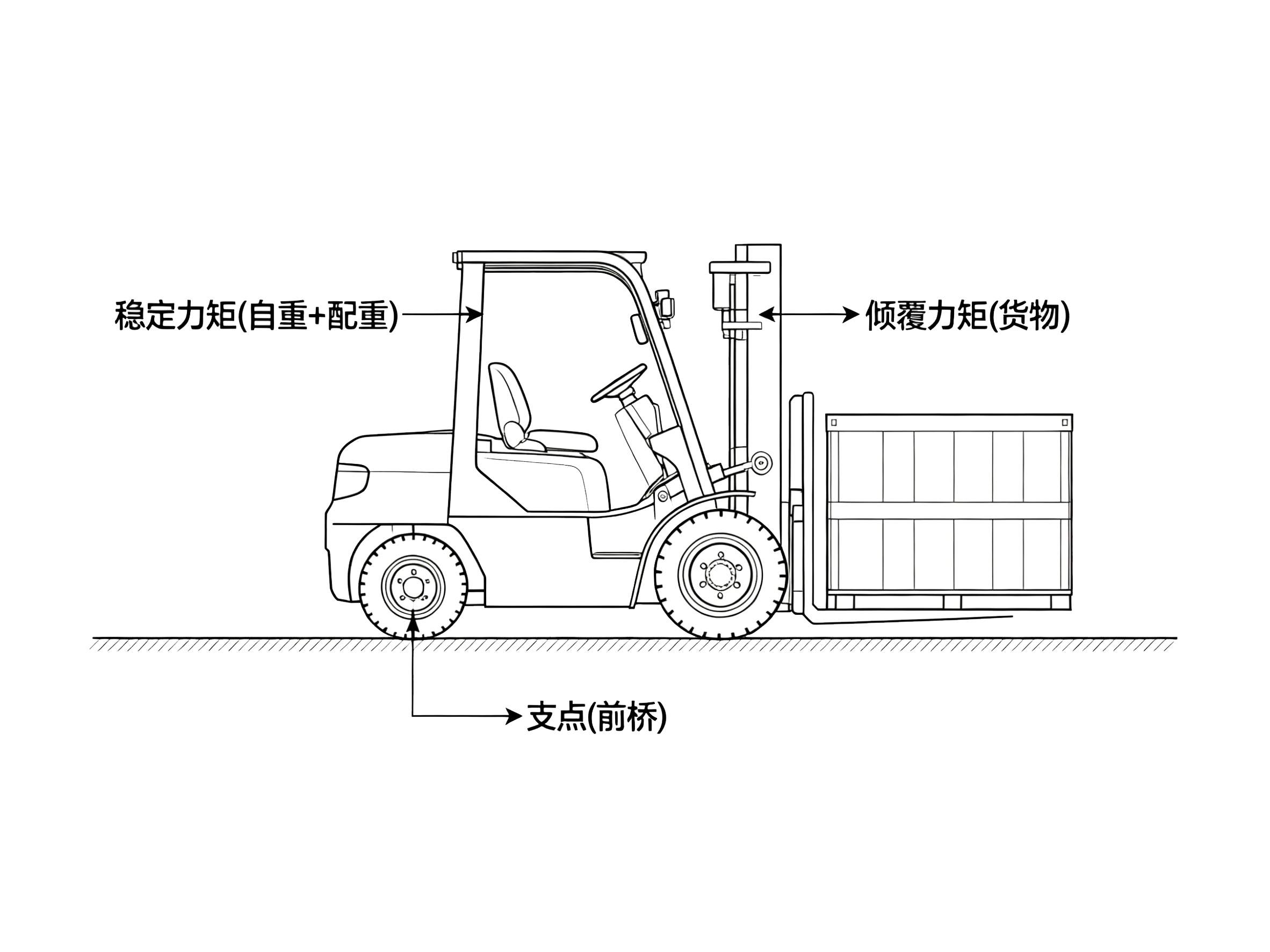
2. Mechanism of LCD's Influence on Actual Lifting Capacity
A forklift operates as a classic lever system, with the front axle serving as the fulcrum. The vehicle's self-weight and counterweight generate a rear stabilizing moment, while the cargo produces an overturning moment. The magnitude of the overturning moment is positively correlated with the LCD: a longer LCD increases the lever arm of the cargo's weight relative to the fulcrum, thereby amplifying the overturning moment. When the overturning moment exceeds the rear stabilizing moment, forward tipping of the forklift occurs.
For instance, consider a 3-ton internal combustion counterbalance truck with a standard LCD of 500 mm. If the cargo's CoG shifts to 700 mm (e.g., when handling elongated equipment or using extended forks), the forklift's actual safe lifting capacity may decrease to approximately 2 tons—regardless of whether it is a premium CHINLIFT Forklift or another brand. Loading the full rated capacity under such conditions will inevitably cause rear-wheel lift-off.
3. Root Cause of Incorrect Capacity Selection by 90% of Users
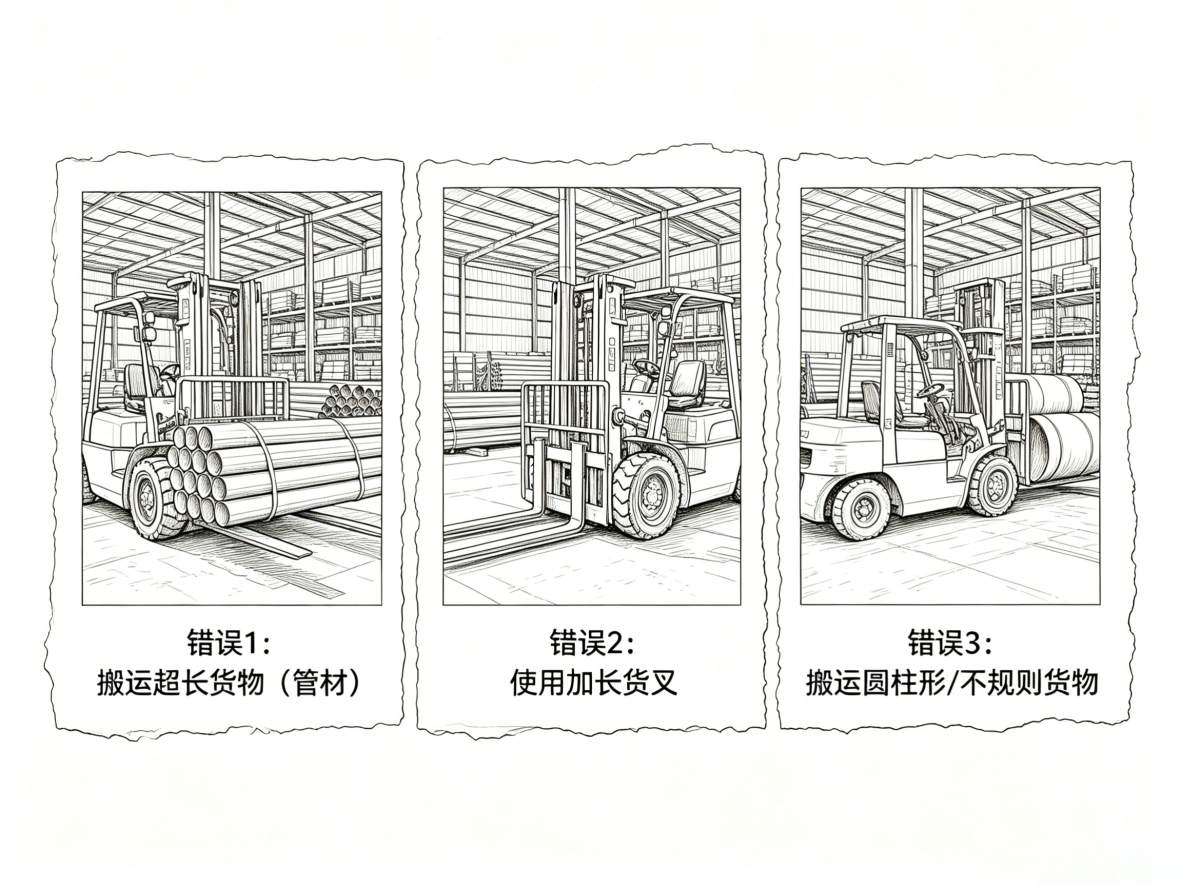
The core issue lies not in the inability to read nameplate specifications, but in the misapplication of "standard operating condition logic" to "non-standard working scenarios." Most selection errors occur in the following cases:
- Cargo length exceeding 1.2 meters, leading to natural outward shift of the CoG;
- Use of extended forks or attachments, which increases the effective LCD;
- Handling of cylindrical, irregularly shaped, or asymmetric cargo, making CoG centering difficult.
In these scenarios, even if the cargo's nominal weight is far below the rated capacity of a diesel powered forklift or internal combustion counterbalance truck, the actual overturning moment exerted on the forklift may already exceed the safety threshold. Even a robust CHINLIFT Forklift cannot defy the laws of physics when the load center distance is ignored.
4. Practical Assessment Methods
First, determine the horizontal distance from the cargo's actual CoG to the vertical plane of the fork tines. Then, cross-reference this distance with the forklift's load capacity chart (a mandatory component of compliant forklifts) to confirm the allowable lifting weight. If the chart is unavailable, a rough empirical rule applies: for every 100 mm increase in LCD, the rated lifting capacity decreases by approximately 15%–20%. This rule holds true for any diesel powered forklift, internal combustion counterbalance truck, or CHINLIFT Forklift.
Conclusion
In essence, forklift selection should prioritize torque matching rather than mere tonnage. Load center distance acts as the critical bridge between "nominal specifications" and "actual operational capacity." Whether you are considering a diesel powered forklift, an internal combustion counterbalance truck, or a CHINLIFT Forklift, neglecting this parameter equates to compromising safety for operational convenience.