When an excavator undercarriage starts showing excessive wear, one common question is whether the drive sprocket or track chain should be replaced first. In many cases, the two components wear together because the sprocket teeth engage directly with the track chain bushings. Replacing only one worn component may shorten the service life of the new part if the other component is already beyond its acceptable wear limit.
The practical answer is to inspect both components and measure their wear before making a replacement decision. If the sprocket teeth are badly hooked or worn but the track chain remains within the manufacturer's limits, sprocket replacement may be sufficient. If the chain has excessive pitch elongation, worn pins and bushings, or damaged links, the chain may also need replacement. When both are severely worn, replacing them as a matched system is often the more reliable option.
For excavator owners, maintenance teams, and parts distributors, understanding this relationship helps avoid unnecessary replacement costs and reduces the risk of premature wear. Yintparts supplies excavator and bulldozer undercarriage parts, including drive sprockets, segments, and track chains for different machine applications.
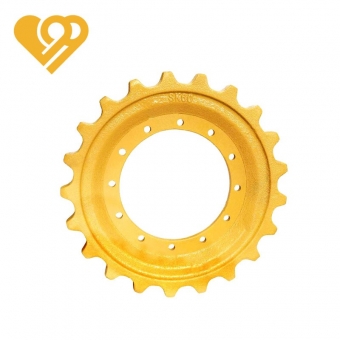
What Is the Difference Between Sprocket Wear and Track Chain Wear?
The drive sprocket transfers power from the final drive to the track by engaging with the chain bushings. The track chain consists of connected links, pins, and bushings that move around the undercarriage as the excavator travels.
Although these components work together, their wear patterns are different.
- Sprocket wear: The teeth become thinner, sharper, hooked, or unevenly worn. The original tooth profile gradually changes, affecting how the sprocket engages with the chain.
- Track chain wear: Pins and bushings wear at their contact surfaces. As wear accumulates, the effective distance between chain pins can increase, a condition commonly described as track chain pitch elongation.
- Combined wear: A worn chain and worn sprocket may no longer mesh correctly. Poor engagement can increase impact, noise, vibration, and wear on both components.
The important point is that sprocket wear and chain wear are related, but they are not interchangeable measurements. A sprocket can have visibly worn teeth while the chain remains serviceable, and a chain can have excessive internal wear even when the sprocket looks relatively acceptable.
When inspecting a machine, compare the visible tooth profile with the chain's pin and bushing condition. The excavator sprocket and segment range is relevant when checking replacement options for drive components.
How Can You Tell When an Excavator Sprocket Needs Replacement?
A sprocket usually needs closer evaluation when its teeth no longer maintain the shape required for proper engagement with the track chain. The exact replacement point depends on the machine model, sprocket design, and the manufacturer's wear limits.
Look for the following warning signs:
- Hooked or curved teeth: The teeth develop a pronounced hooked profile instead of retaining their intended shape.
- Sharp or pointed tooth tips: The tooth profile becomes noticeably thinner or sharper due to material loss.
- Uneven tooth wear: Some teeth are more worn than others, potentially indicating uneven loading, alignment issues, or an abnormal engagement pattern.
- Chipped or broken teeth: Missing material or structural damage requires prompt assessment.
- Abnormal chain engagement: The chain may ride unevenly on the sprocket, make unusual knocking sounds, or show repeated impact marks.
Visual inspection is useful, but it should not be the only basis for replacement. Some sprocket designs naturally have different tooth profiles, so compare the component with the correct specifications or a suitable reference for that machine.
Yintparts offers drive sprockets and segments for excavators and bulldozers across a range of machine sizes. When selecting a replacement, confirm the machine model, part number, mounting dimensions, and tooth configuration rather than relying on appearance alone.
How Do You Know When an Excavator Track Chain Is Worn Out?
Track chain wear is often less obvious than sprocket tooth wear because much of it develops at the pin-and-bushing contact surfaces. The chain may look intact from the outside while internal wear has already changed its effective pitch.
Common signs that a track chain needs measurement or replacement include:
- Excessive pitch elongation: The measured distance across a specified number of chain pitches exceeds the manufacturer's service limit.
- Severe pin and bushing wear: Contact surfaces are worn beyond the allowable dimensions.
- Abnormal chain movement: The chain does not travel smoothly or engages unevenly with the sprocket.
- Damaged links: Cracks, deformation, looseness, or other structural damage appear in the chain assembly.
- Repeated track adjustment problems: The machine cannot maintain the specified track tension under normal conditions, although the adjuster, idler, and other components should also be checked.
Track chain pitch elongation is especially important because it affects how the chain meshes with the sprocket. As the effective pitch changes, load distribution across the contacting surfaces can deteriorate, accelerating wear on the sprocket and chain.
For this reason, measuring the chain according to the manufacturer's inspection procedure is more reliable than judging it only by sag or appearance. Yintparts provides excavator track link and chain-related products for buyers evaluating undercarriage replacement requirements.

Should You Replace the Sprocket or Track Chain First?
There is no universal rule that the sprocket must always be replaced before the track chain, or vice versa. The correct decision depends on the measured condition of both components and the manufacturer's service limits.
If the sprocket is worn but the chain remains within specification: Replacing the sprocket alone may be appropriate. Before installation, verify that the chain pitch and bushing condition are acceptable and that the replacement sprocket matches the machine.
If the chain is beyond its wear limit but the sprocket remains serviceable: The chain may need replacement. However, inspect the sprocket teeth carefully because the worn chain may have altered their profile or contact pattern.
If both components are severely worn: Replacing both together is often the safer maintenance decision. Installing a new chain against a heavily worn sprocket, or a new sprocket against a chain with excessive pitch elongation, can lead to poor engagement and accelerated wear.
If either component is cracked, broken, or structurally damaged: Stop using the machine until the damage has been assessed and the necessary repairs are completed. Structural damage should not be treated as ordinary wear.
The decision should also account for labor costs, machine downtime, expected remaining service life, and the consequences of an unexpected failure. A component that is technically still usable may not be the most economical choice if the machine will soon require another major undercarriage repair.
How to Inspect Sprocket and Track Chain Wear Accurately
A useful inspection combines visual checks with measurements. Follow the machine manufacturer's maintenance instructions and use the specified wear limits for the exact model and undercarriage configuration.
- Clean the undercarriage: Remove packed soil and debris so that tooth profiles, chain links, pins, and bushings can be inspected clearly.
- Inspect the sprocket teeth: Look for hooked profiles, uneven wear, chipped teeth, cracks, and abnormal contact marks.
- Measure track chain pitch: Use the manufacturer's specified measurement span and method. Compare the result with the service limit for the machine.
- Check pins and bushings: Assess wear at the relevant contact surfaces and look for looseness or damage.
- Inspect the entire undercarriage: Check rollers, idlers, track shoes, and track tension because these components can affect chain alignment and wear patterns.
- Record both sides separately: Compare left and right undercarriage wear to identify differences that may point to operating conditions or mechanical problems.
Measurements should be taken under the conditions specified by the manufacturer. Do not apply a generic percentage wear limit to every excavator, because allowable wear and measurement procedures vary by component and machine design.
If wear is close to the service limit, repeat the measurement carefully or have the component assessed by a qualified technician. Accurate records also help maintenance teams plan replacement before wear causes secondary damage.
What Causes Sprockets and Track Chains to Wear Out Too Quickly?
Premature wear does not always mean that the components are poorly made. Working conditions, maintenance practices, and the condition of other undercarriage parts can all affect service life.
- Abrasive ground conditions: Sand, gravel, and other abrasive materials can accelerate wear at contact surfaces.
- Incorrect track tension: Excessive or insufficient tension can change loading and wear patterns. Follow the manufacturer's track-sag procedure rather than tightening the chain by guesswork.
- Operating habits: Frequent sharp turns, counter-rotation, and unnecessary travel on abrasive ground can increase undercarriage wear.
- Poor alignment or damaged components: Worn rollers, idlers, or other damaged parts may contribute to uneven chain travel.
- Replacing only one component in a badly worn system: A new part may wear quickly if it must engage with a component that is already outside its service limits.
- Incorrect replacement parts: A sprocket or chain that does not match the required specifications may not engage properly.
Maintenance teams should investigate repeated or uneven wear rather than simply installing new parts. Checking the complete undercarriage can help identify the original cause and reduce the chance of another premature replacement.
For a broader view of compatible components, the excavator undercarriage component range is a useful starting point when reviewing related wear parts and replacement needs.
How to Choose Replacement Sprockets and Track Chains
When sourcing undercarriage parts, buyers should confirm technical compatibility before comparing prices. A part that looks similar may have different dimensions, mounting arrangements, tooth profiles, or chain specifications.
Before ordering, prepare the following information:
- Excavator or bulldozer make and model.
- OEM part number or existing component identification, where available.
- Sprocket or segment dimensions and mounting configuration.
- Track chain type, pitch, link count, and other specifications required for the application.
- Working environment, including abrasive soil, rock, mining, demolition, or general construction.
- Inspection measurements and photographs showing the current wear condition.
Yintparts manufactures undercarriage parts using professional quenching, tempering, and machining processes. Its sprocket and segment range includes components for different machine applications, while its track chain products cover various configurations. Buyers should share the machine details and part specifications to confirm the correct replacement.
For a supplier comparison, consider dimensional accuracy, material and heat-treatment controls, product inspection, compatibility support, and delivery requirements alongside the purchase price. A well-matched component helps reduce the risk of premature wear caused by incorrect engagement.
Frequently Asked Questions About Sprocket and Track Chain Replacement
How can you tell whether an excavator sprocket or track chain needs replacement first?
Inspect and measure both components. Replace the sprocket if its tooth wear exceeds the applicable limit, and replace the chain if pitch elongation, pin and bushing wear, or structural damage exceeds the manufacturer's limits. If both are severely worn, replacing them together is often the better option.
Can I install a new sprocket without replacing the track chain?
Yes, if the existing chain remains within the manufacturer's wear limits and engages correctly with the replacement sprocket. The chain's pitch, pins, bushings, and overall condition should be checked before installation.
Can a worn track chain damage a new sprocket?
Yes. Excessive pitch elongation or severe pin and bushing wear can cause poor engagement and uneven loading, accelerating wear on the new sprocket. Check the chain condition before replacing the sprocket.
What are the main signs of a worn excavator sprocket?
Common signs include hooked or pointed teeth, uneven tooth wear, chipped or broken teeth, and abnormal engagement with the chain. Compare the observed condition with the correct machine-specific wear specifications.
How is track chain wear measured?
Track chain wear is commonly assessed by measuring a specified span across multiple pitches and comparing the result with the manufacturer's limits. Pin and bushing wear should also be checked using the prescribed inspection method.
Should sprockets and track chains always be replaced as a set?
No. Replacement depends on the condition and service limits of each component. Replacing both may be appropriate when both are badly worn, but a serviceable chain or sprocket may not need replacement if it meets the applicable specifications.
Why do new sprockets wear out quickly?
Possible causes include an excessively worn track chain, incorrect part specifications, unsuitable track tension, misalignment, abrasive working conditions, and operating practices that increase undercarriage loading. Inspect the complete system to identify the cause.